
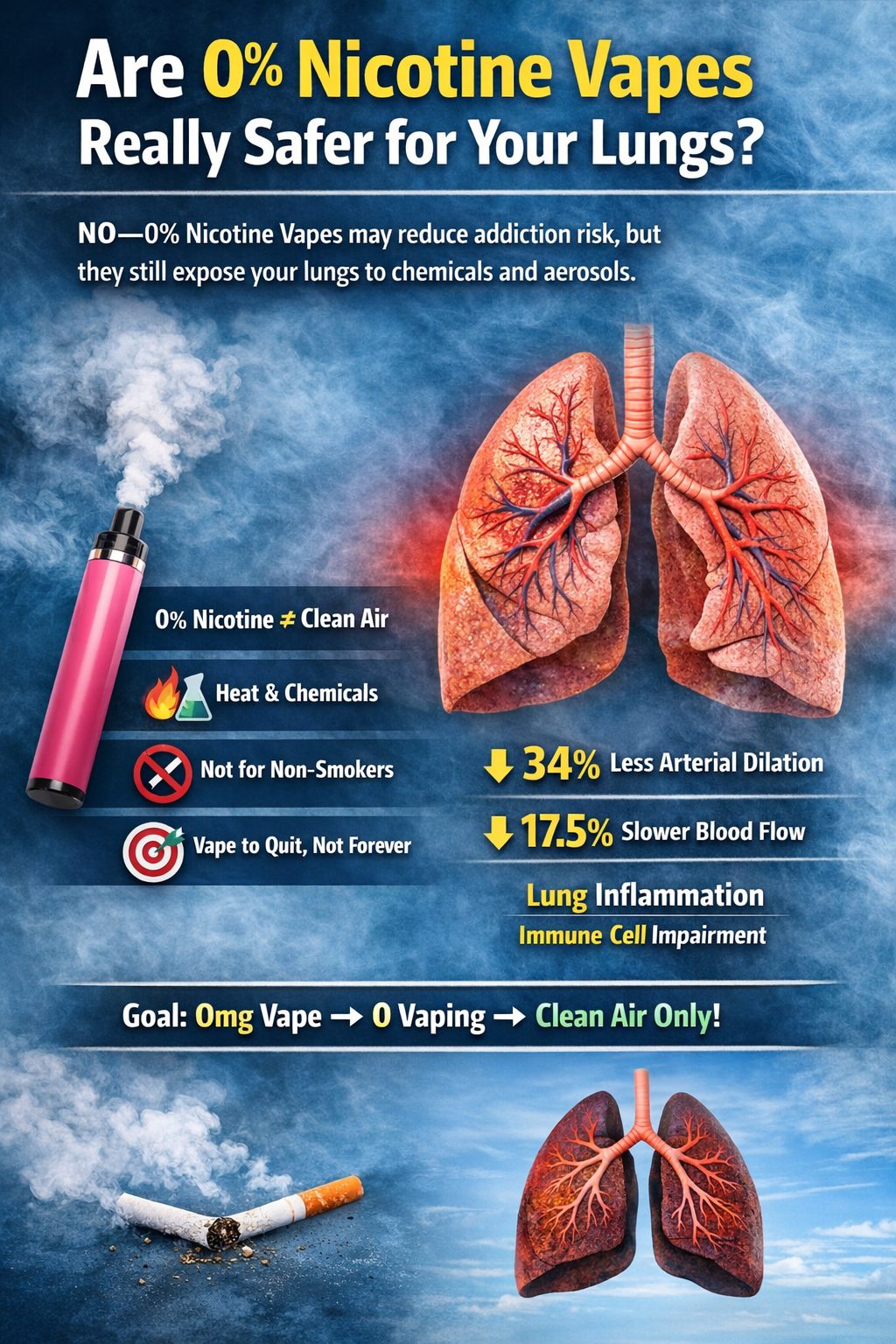
Are 0% Nicotine Vapes Really Safer for Your Lungs?
NO — 0% Nicotine Vapes may reduce addiction risk, but they still expose your lungs to chemicals and aerosols.
Sure, 0% nicotine is definitely better than smoking a pack a day, but it’s not “clean mountain air.”
- 0% nicotine = still not “luke-warm mountain air.”
- You’re inhaling heat + chemicals + tiny particles.
- Non-smokers shouldn’t start vaping just because it’s “no nicotine.”
- If you smoke, use vaping to taper off and quit — don’t make it permanent.
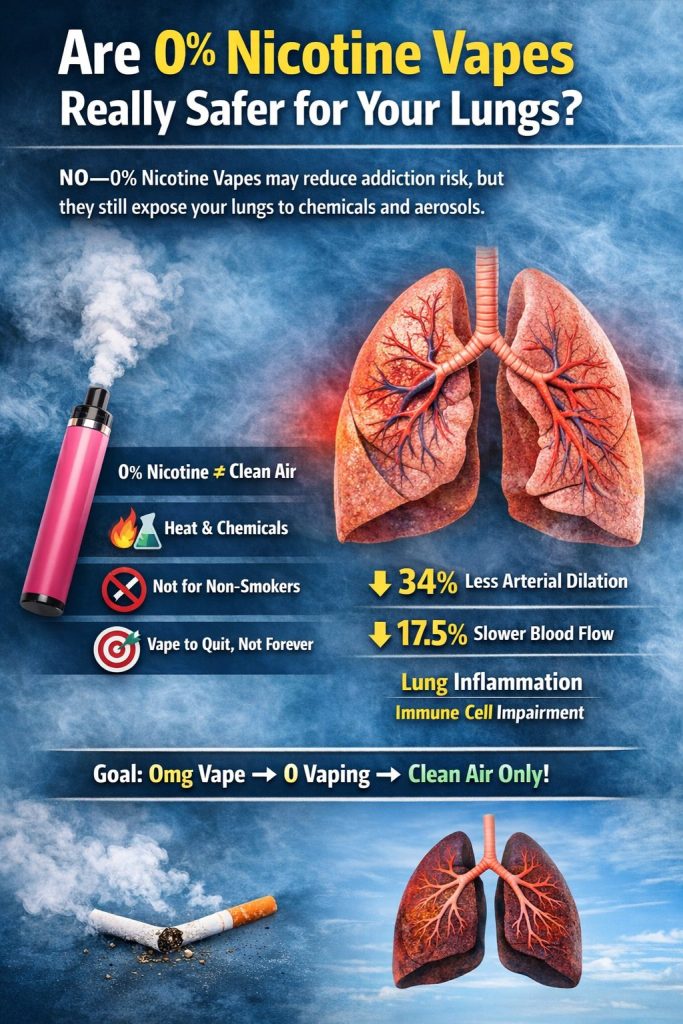
A study from the University of Pennsylvania revealed something surprising: even inhaling nicotine-free vapor a few times can immediately reduce the function of your major arteries.
The experiment showed that after inhaling 0% nicotine aerosol, arterial dilation in the femoral artery dropped by 34% on average, and blood flow slowed by 17.5%.
In other words, even without addictive substances, these heated chemicals (like propylene glycol and vegetable glycerin) trigger an immediate defensive inflammatory response in the lungs.
“If you want a truly clean-breathing future, the final goal should be:0mg vape → 0 vaping → clean air only.”
Why 0% Nicotine Vaping Still Stresses Your Lungs?
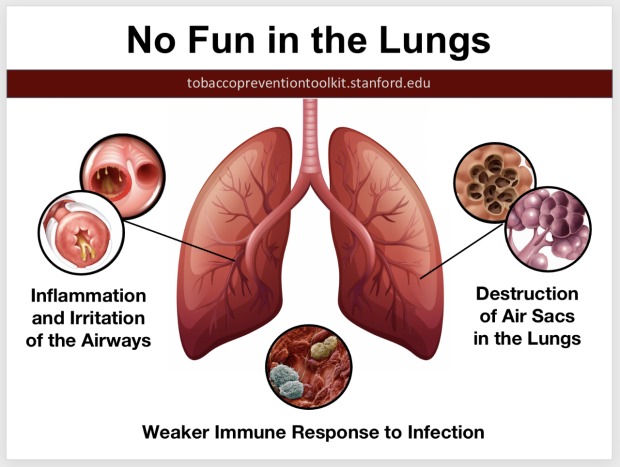
Even without nicotine, the physics of vaping still expose your body to stress:
- Aerosol irritation: That “cloud” is a mist of tiny liquid particles that can penetrate deep into lung tissue.
- Chemical exposure: Vegetable glycerin (VG) and propylene glycol (PG) are food-safe — but your lungs aren’t designed to process aerosolized food additives.
- Heavy metal leaching: Heating coils can release microscopic amounts of nickel, tin, and lead. Your lungs have no filter for metals.
- Even a nicotine-free puff is enough to put your lungs into inflammation mode.
What 0% Nicotine Vapes Still Do to Your Body?
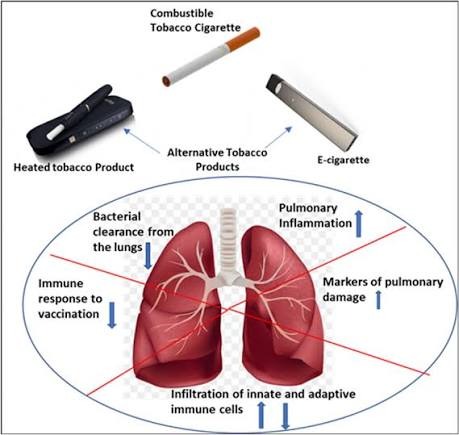
1. Immune System Impact
Your lungs rely on alveolar macrophages to clear bacteria and dust. Vaping aerosol — even without nicotine — can paralyze these cells, lowering your natural defenses and increasing the risk of infections or lingering coughs.
2. Chronic Irritation & Inflammation
Your lungs weren’t designed to handle constant foreign particles. Regular exposure forces your body into a constant state of repair, which is far from ideal long-term.
3. Heavy Metals & Toxins
Metal particles from coils can embed in lung tissue. Unlike your stomach or skin, your lungs cannot efficiently remove heavy metals, so some may stay for years.
4. Flavor Chemicals Aren’t Harmless
Some common flavorings (like diacetyl, used in creamy or buttery e-liquids) are linked to Bronchiolitis Obliterans, also known as “popcorn lung,” a serious condition that scars the small airways. Eating them may be safe — inhaling them is not.
0% Nicotine vs Standard Vape vs Cigarettes:Is 0% Nicotine Safe for Quitting?
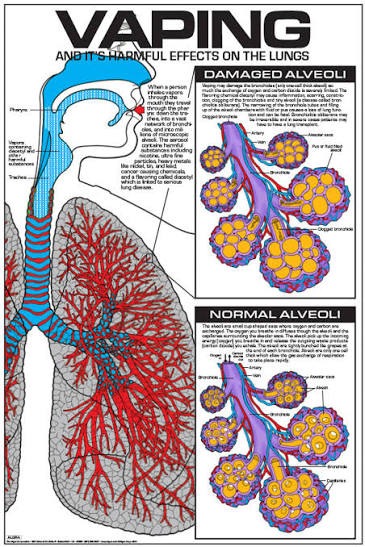
This is where the nuance comes in. If you are a long-term smoker, switching to a 0% nicotine vape is a massive win for your heart and blood pressure. You are removing the primary reason for your cravings and the 7,000+ toxic chemicals found in combustible tobacco.
However, the goal should be a “bridge,” not a “destination.”
- Stage 1: Quit cigarettes using nicotine vapes.
- Stage 2: Taper down to 0% nicotine to break the chemical addiction.
- Stage 3: Quit vaping entirely to give your lungs a break from aerosols.
| Feature / Risk | 0% Nicotine Vape | Standard Nicotine Vape | Traditional Cigarettes |
| Addiction Risk | Low (mostly psychological) | High | Extreme |
| Lung Inflammation | High | High | Severe |
| Blood Vessel Stress | Moderate | High | Severe |
| Exposure to Toxic Chemicals | Trace / Low | Moderate | Extreme (7,000+ chemicals) |
| Heavy Metal Exposure | Yes (Nickel, Lead, Tin) | Yes | Low |
| Immune Function Impact | Yes | Yes | Yes |
Who is 0% Nicotine “Safer” For?
Adults transitioning away from nicotine: It helps satisfy the “hand-to-mouth” habit without the drug.
People trying to reduce dependence: It’s a great tool for the final step of a quitting journey.
NOT for teens: The adolescent brain is still developing, and 0% vapes have been shown to “prime” the brain for future substance use.
NOT for non-smokers: There is zero health benefit to inhaling aerosolized glycerin.
Who Should Avoid 0% Nicotine Vapes
Non-smokers: There’s no health benefit; you’re exposing your lungs to chemicals for no reason.
Teens & young adults: Early exposure may “prime” the brain for future substance use.
People with lung conditions: Asthma, COPD, or prior infections can worsen with even mild lung irritation.