
Do Vapes Have Calories? The Truth About E-Liquid and Weight Gain

You’re trying to quit smoking, maybe shed some extra weight, or you’re just interested if vaping, kind of like a vape, can somehow secretly add calories. The question “Do vapes have calories?” has gotten a lot more search attention lately, especially with fitness people and former smokers. Most of them wonder this too: since the sweet e-liquid smells like some sort of drink, does that mean it will translate into weight gain, the way cola does when you actually sip it?
The answer is clear: Technically, e-liquid contains about 4-5 kilocalories per milliliter, but the amount actually absorbed by the body is almost zero, and its impact on weight can be negligible. Vaping won’t make you gain weight due to calories, but factors like nicotine may indirectly affect appetite and metabolism. This article combines the latest data to help you understand everything at once.
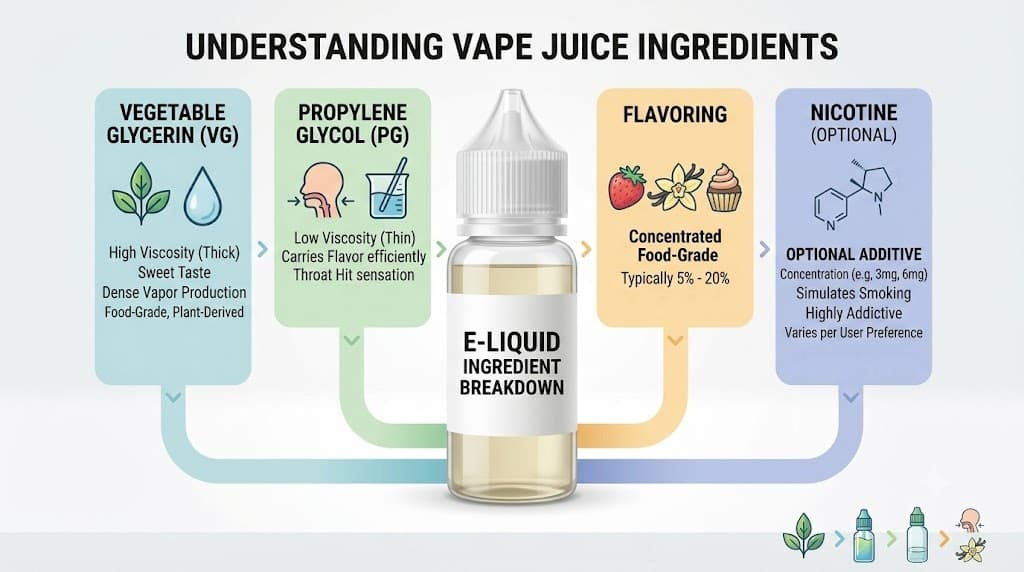
Where Do The Calories In E-cigarettes Actually Come From?
The core component of an electronic cigarette is the e-liquid, which mainly consists of:
- Plant glycerin (VG): Provides thick smoke and a sweet flavor, with approximately 4.32 kilocalories per gram.
- Propylene glycol (PG): Provides a throat hit and serves as a carrier, with approximately 4.0 – 4.14 kilocalories per gram.
- Nicotine: Contains almost no calories.
- Flavors and additives: Usually made from food-grade ingredients, with extremely low or no calories (mostly artificial sweeteners such as sucralose, rather than real sugar).
A typical 50/50 PG/VG mixed e-liquid, with approximately 4-5 kilocalories of heat per milliliter of the liquid.
Actual data comparison:
| Device type | E-cigarette liquid capacity | Total caloric content on paper (approximate) | What food is equivalent to |
| Small disposable vape | 2ml | 8 – 10 kilocalories | Less than 1/8 of a digestive biscuit |
| Medium pod/vaporizer cartridge | 10ml | 40 – 50 kilocalories | Half a banana |
| Large bottle of e-liquid | 30ml | 120 – 150 kilocalories | Less than half a can of cola |
These are “paper-based data”, which represent the theoretical values for consuming e-liquid as food. However, in reality, you inhale the vapor rather than drinking it.
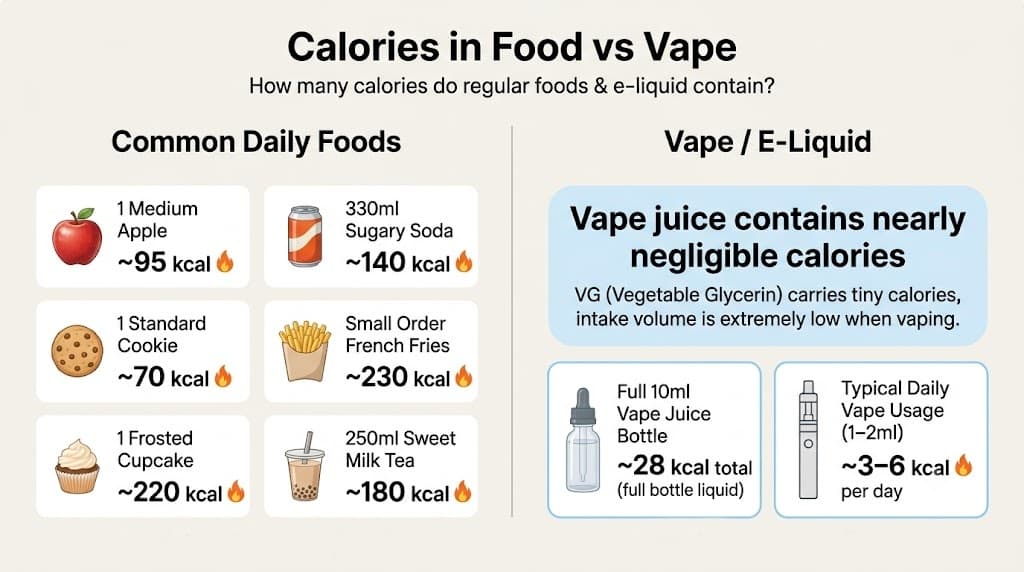
Why is The Heat Inhaled Hardly Absorbed?
This is the most crucial difference:
The human body absorbs heat mainly through the digestive system (gastrointestinal tract). The primary function of the lungs is gas exchange, not digestion of nutrients. The vast majority of inhaled VG and PG is exhaled, or forms a small amount of condensation in the mouth/throat. Even if swallowed, the amount is extremely small (less than 1 kilocalorie per day for heavy use).
Research and expert consensus show that the heat absorbed through the lungs is negligible. Even if 100% absorbed, a 2ml disposable vape is equivalent to very little heat, far below the fluctuations in daily diet.
What about sweet electronic cigarettes? Many fruit flavors and sweet tastes use artificial sweeteners, which do not provide as much calories as real sugar. Sweetness is just the taste, not a source of calories.
Can Vaping Make You Fat?
Direct answer: You won’t gain weight due to heat.
However, weight changes may result from other indirect factors:
- The effect of nicotine: In the short term, it can suppress appetite and slightly increase metabolism, making some people feel “easier to control their weight”. But after long-term use, tolerance increases and the effect weakens. When suddenly reducing or stopping use, there may be a rebound in appetite, leading to weight gain.
- Switching from traditional cigarettes: The nicotine in traditional tobacco has a similar effect. After quitting smoking, many people gain weight. Switching to e-cigarettes may lead to a similar situation, but this is more due to the “quit smoking effect” rather than the vape itself.
- Lifestyle: If vaping makes you relax, sit for long periods, or is paired with high-calorie snacks, it may indirectly cause weight gain.
Multiple observations show that the direct calorie impact of moderate e-cigarette use on weight is negligible. The core of weight loss is still diet control and exercise, rather than relying on vaping.
How many calories do you consume each day?
Assuming you use 2-5ml of e-liquid per day (moderate user):
- Theoretical calories: 8-25 kilocalories.
- Actual absorption: Much lower than 1 kilocalorie (equivalent to the calories from biting into a cucumber).
Tips:
- Want precise tracking? Check the device capacity and your usage habits. Most vapes consume only 10-20 kilocalories worth of paper value in one use, spread out over several days.
- Fitness enthusiasts can rest assured: vaping will not break your calorie deficit, and it generally does not affect diet patterns such as ketogenic or intermittent fasting.
Common Misconceptions Debunked
1. “Sweet vapes contain sugar and will make you gain weight” – False. Most use artificial sweeteners and have extremely low calories.
2. “Vapes are zero-calorie wonders and can be used freely” – Not entirely correct. Although calories are negligible, nicotine is addictive and long-term use still requires other health considerations.
3. “It’s much healthier than smoking traditional cigarettes, and you won’t gain weight” – Switching might cause weight fluctuations and one needs to pay attention to the overall lifestyle.
4. “One puff of a vape is the same as drinking a beverage” – Completely different. The absorption mechanism of inhalation and drinking are worlds apart.