
How to DIY Vape Juice: Balance Nicotine, VG/PG & Flavors Easily
Making your own vape juice at home lets you determine the flavors and decide on the nicotine strength and quality of vapor produced. This is way better than the options available in the market. Whether your goal is to replicate a favorite juice that was discontinued or to produce a brand-new, unique juice, the options available to you in DIY juice are unlimited. Risks are part of every process, and in this case, the risks include improperly handling nicotine or using poor quality ingredients… and of course, ingredients that are too harsh or inconsistent in their effect, and could even pose serious health risks.
This document aims to take the mystery out of how to DIY vape juice at home. This is done by providing some evidence, a DIY plan, and safety guidelines. We will help you break down the science of nicotine, VG/PG ratios, and flavors, in layers of and we will make sure that, even you as a novice, will be able to produce a vape juice that is safe and satisfying.
Core Principles:
Every high-quality vape juice relies on three foundational components: nicotine, vegetable glycerin (VG), propylene glycol (PG), and flavorings. Understanding their interactions is critical to balancing taste, vapor production, and throat feel. Below is a clear breakdown of each element’s role.
Nicotine
Nicotine is the primary component responsible for the“throat hit”—the mild tingling sensation in the throat during inhalation. Its concentration directly impacts both satisfaction and comfort, and choosing the right strength depends on your vaping device and prior nicotine habits:
- Mouth-to-Lung (MTL) Devices: Smaller, cigarette-like devices require higher nicotine concentrations (12–20 mg/mL) to mimic the throat hit of traditional smoking.
- Direct-Lung (DL) Devices: Larger, cloud-focused devices use lower concentrations (3–6 mg/mL) because they deliver more vapor per puff, reducing the risk of overexposure.
VG vs. PG
VG and PG are hygroscopic (moisture-absorbing) carriers that suspend nicotine and flavors while producing vapor. Their chemical properties dictate vapor density, throat feel, and device compatibility—here’s how they compare:
| Characteristic | Vegetable Glycerin (VG) | Propylene Glycol (PG) |
| Vapor Production | High (thick, dense clouds) | Low (thin, subtle vapor) |
| Throat Feel | Smooth, mild (minimal irritation) | Crisp, pronounced (mimics cigarette throat hit) |
| Flavor Carry | Mutes intense flavors (ideal for sweet profiles) | Enhances flavor clarity (ideal for menthols, tobaccos) |
| Device Suitability | DL devices, sub-ohm coils (resists clogging) | MTL devices, high-resistance coils (prevents gurgling) |
| Allergen Risk | Rare (derived from plant oils) | Low (FDA-approved for food use, but 1–2% may experience mild irritation) |
Most vapers use a hybrid ratio(not 100% VG or PG) to balance vapor and flavor. A70% VG / 30% PG blend is a universal starting point—it works for 80% of devices and appeals to most taste preferences.
Flavorings
Flavorings are the most creative component of DIY vape juice, but they require precision to avoid off-tastes (e.g., bitterness, chemical afternotes). Follow these evidence-based guidelines:
- Concentration: Use10–20% flavoring by volume. Concentrations below 10% result in weak, muted flavors; above 20% risk burning (due to high sugar or alcohol content in flavorings) and throat irritation.
- Layering: Build flavor in three tiers to create depth:
- Base Flavor (60–70%): The dominant note (e.g., strawberry, vanilla, tobacco).
- Mid Notes (20–30%): Complementary flavors that soften or enhance the base (e.g., cream for sweetness, citrus for brightness).
- Top Notes (5–10%): Subtle accents that add complexity (e.g., mint for freshness, caramel for richness).
Device Compatibility
Your device’s design dictates the ideal vape juice formula. Using the wrong blend leads to poor performance (e.g., clogging, weak vapor) or discomfort:
- MTL Devices: Require 40–50% PG to produce a satisfying throat hit and prevent coil gurgling (PG’s thin consistency flows easily through small MTL coils).
- DL Devices: Need 70–80% VG to generate thick clouds and avoid dry hits (VG’s viscosity protects sub-ohm coils from overheating).
Tool Checklist
Creating safe, consistent DIY vape juice requires high-quality supplies—cutting corners on tools leads to subpar results and unnecessary risks. Below is a curated list of essentials, with guidance on what to avoid.
- Measuring Tools: Use luer-lock syringes(1 mL, 5 mL, 10 mL) for accuracy—droppers are imprecise and lead to inconsistent ratios. Include a small graduated cylinder (20 mL) for larger batches.
- Mixing Containers: Use amber glass bottles(10 mL–100 mL) for mixing and storage—amber glass blocks UV light, which degrades nicotine and flavors. Avoid plastic bottles (some plastics leach chemicals into juice over time).
- Safety Gear: Wear nitrile gloves(nicotine absorbs through skin) and safety glasses(to prevent eye irritation). Keep a bottle of water nearby—if nicotine touches skin, rinse immediately.
- Extras: A small digital scale (0.01g precision) for advanced users (weight-based mixing is more accurate than volume), and a bottle capper for childproof caps.
Recipe Design
Designing a DIY vape juice recipe doesn’t require advanced math—just a clear target (nicotine strength, VG/PG ratio, flavor profile) and simple calculations. Below is a foolproof method for beginners, with a sample recipe to copy.
1.Calculate Nicotine Strength
The goal is to dilute your high-concentration nicotine base to a safe, enjoyable strength. Use this formula:
Volume of nicotine base (mL) = (Desired nicotine strength × Total juice volume) ÷ Nicotine base strength
Example: You want 10 mL of 6 mg/mL juice (for a DL device) using a 100 mg/mL nicotine base:
(6 mg/mL × 10 mL) ÷ 100 mg/mL = 0.6 mL of nicotine base
2.Determine VG/PG Ratio
Start with a 70% VG / 30% PG blend (universal for most devices). For 10 mL of total juice:
- Total VG needed: 70% of 10 mL = 7 mL
- Total PG needed: 30% of 10 mL = 3 mL
Note: Your nicotine base is already mixed with PG (e.g., 0.6 mL of nicotine in PG). Subtract this from the total PG to avoid overloading:
3 mL (total PG) – 0.6 mL (PG from nicotine) = 2.4 mL of pure PG
3.Add Flavorings
Use 15% flavoring by volume for your first batch (a safe middle ground). For 10 mL of juice:
15% × 10 mL = 1.5 mL of flavoring
Step-by-Step Mixing Process: Precision and Consistency
Even the best recipe fails without proper mixing. Follow this standardized process to ensure your DIY vape juice is smooth, consistent, and safe.
1.Pre-Mixing Prep
- Work in a well-ventilated area (avoid enclosed spaces—nicotine vapor can irritate airways).
- Lay out all tools and ingredients on a clean, non-porous surface (e.g., a silicone mat)—this prevents cross-contamination.
- Verify ingredient labels twice: Confuse VG with PG, and your juice will perform poorly; mix up nicotine strength, and it may be unsafe.
2.Measuring & Mixing (Order Matters)
- Add Nicotine First: Pour the calculated nicotine base (0.6 mL) into your amber mixing bottle. This ensures it’s fully diluted by other ingredients.
- Add PG: Pour the pure PG (2.4 mL) into the bottle. Cap and shake gently for 10 seconds to mix nicotine and PG (this prevents separation).
- Add VG: Slowly pour the VG (7.0 mL)—VG is thick, so tilt the bottle to avoid spills. Cap and shake for 20 seconds.
- Add Flavorings: Drip the flavoring blend (1.5 mL) into the bottle. Cap tightly and shake vigorously for 1 minute—this breaks up flavoring droplets and ensures even distribution.
3.Steeping (Optional but Recommended)
Steeping is the process of letting your vape juice rest to enhance flavor. It allows volatile compounds in flavorings to stabilize, reducing “chemical” aftertastes. Here’s how to do it:
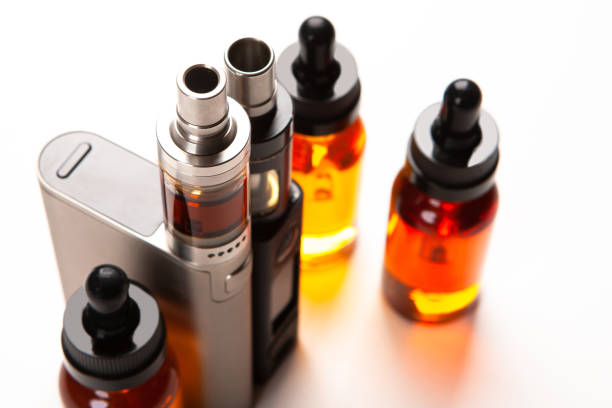
- Basic Steep: Seal the bottle and store it in a dark, cool place (e.g., a drawer) for 24–48 hours.
- Advanced Steep: For bold flavors (e.g., tobacco, vanilla), “burp” the bottle daily (open briefly to release pressure) and steep for 5–7 days.
- Skip Steeping: Light, fruity flavors (e.g., citrus, berry) often taste good immediately—steeping may fade their brightness.
4.Testing & Adjusting
After steeping, test your juice in your device:
- Too Weak: Add 0.2–0.3 mL of flavoring, shake, and retest.
- Too Harsh: Add 0.5 mL of VG to dilute nicotine and flavoring.
- No Vapor: Increase VG ratio by 5–10% in your next batch (for DL devices) or decrease it (for MTL devices).
Safety Guidelines
DIY vape juice safety is non-negotiable. Below are evidence-based guidelines to protect yourself and others.
Nicotine Storage & Handling
- Store Securely: Keep nicotine base and mixed juice in childproof, amber glass bottles, locked in a cabinet away from kids and pets. Nicotine is toxic if ingested—even a small amount (10 mL of 100 mg/mL nicotine) can be dangerous for children.
- Dispose Properly: Never pour unused nicotine or juice down the drain (it contaminates water supplies). Seal it in a plastic bag and discard with household waste, or check local guidelines for hazardous waste disposal.
- Emergency Protocol: If nicotine touches skin, rinse with cold water for 10 minutes; if ingested, call poison control immediately.
Hygiene & Sanitation
- Clean Tools Between Uses: Wash syringes, graduated cylinders, and mixing bottles with warm, soapy water after each batch. Rinse thoroughly and air-dry—residue from previous blends causes off-tastes.
- Avoid Cross-Contamination: Use separate syringes for nicotine and flavorings (never reuse a nicotine syringe for flavoring). This prevents nicotine from diluting flavorings or vice versa.
Common Mistakes & Troubleshooting
Even experienced DIY vapers make mistakes. Below are the most frequent issues, their root causes, and actionable solutions to save your batch.
| Problem | Root Cause | Solution |
| Bitter or Chemical Taste | Overconcentrated flavoring (>20%) or low-quality flavorings | Add 0.5–1 mL of VG to dilute; use vape-specific flavorings next time |
| Dry Hits (Burning Sensation) | Too much PG (causes coil dryness) or old coil | Increase VG ratio by 10%; replace coil with a new one |
| Separation (Layers in Bottle) | Inadequate mixing or cold storage | Shake vigorously for 1 minute; store at room temperature (avoid refrigeration) |
| Faded Flavor After 1 Week | Exposure to light or heat (degrades flavorings) | Transfer to amber glass; store in a cool, dark drawer |
| Clogged Coils | Too much VG (thick consistency clogs MTL coils) | Use 50/50 VG/PG ratio for MTL devices; clean coils with warm water |
Conclusion
Making your own vape juice will get better with practice. To learn about how different vape juice ingredients work together, begin with single-flavor recipes, then attempt layered recipes as your self-assurance increases. Always keep safety and quality in mind—use USP-grade ingredients, safe vape juice making methods, and avoid rushing any step.
The ability to customize is indeed the best part of how to DIY vape juice at home. Every detail and characteristic of the vape juice can be tweaked to create a blend that fits your vape device, personal taste, and lifestyle. Whether you prefer the smooth vanilla custard or the refreshing citrus combination, the perfect juice is just a few careful measurements away.