

Is Vape Worse Than Cigarette?
Many people believe that vape do not contain tar and are healthier than traditional cigarettes, considering them a “safer choice” for quitting smoking or trying nicotine for the first time.
However, for both vape and traditional cigarettes, nicotine addiction is one of the core hazards.
Although vape may seem “mild,” they are not the best first choice for people who have never smoked, and they are not the most reliable tool for quitting smoking.
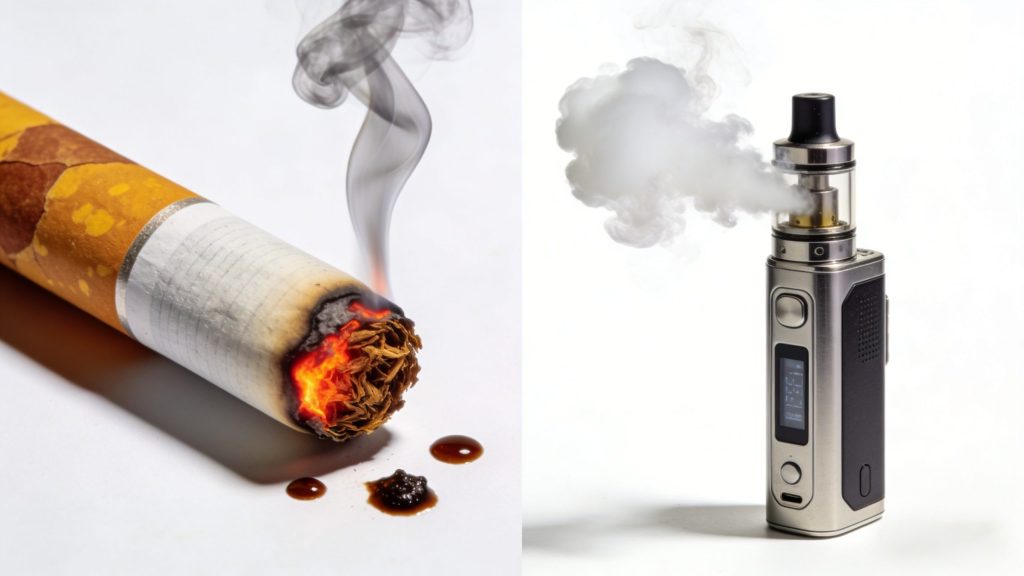
Which is More Harmful to the Body? (Traditional Cigarettes: “The Comprehensive Killer”)
- Traditional cigarettes: Proven “comprehensive killers.” Cigarette smoke contains over 7,000 chemicals, at least 70 of which are known carcinogens, including benzo[a]pyrene and nitrosamines.
- vape: While vapes eliminate tar, they still contain nicotine and chemical additives, and their long-term health effects are unclear. Cigarettes’ harms are well-established; vapes may be less harmful than traditional cigarettes, but they are not harmless.
| High risk of chronic cough, lung cancer, and COPD | Cigarettes | vape | Analysis |
| Harmful substances | High in tar and known carcinogens | Tar-free but contains nicotine and chemical additives | Cigarettes’ long-term harm is clear; long-term health risks of vape remain uncertain |
| Physical impact | High risk of chronic cough, lung cancer, COPD | Aerosol inhalation may irritate the lungs; long-term impact unknown | Long-term safety of vape is uncertain, potential harm exists |
| Cardiovascular risk | Increased risk of cardiovascular disease | Nicotine can still raise blood pressure and heart rate | Both affect cardiovascular health; e-cigarette risk should not be underestimated |
Which is More Addictive? (vape “Gentle Trap” Leads to Higher Addiction)
vape are more likely to create hidden, high-frequency, and persistent nicotine dependence, especially for youth and non-smokers.
- vape: Addiction = nicotine dependence + low threshold for initiation + appealing flavors.First-time use addiction rate: 28.9%; Long-term use (over 1 year) addiction rate: 91.2%
- Cigarettes: Addiction = nicotine dependence + habitual behavioral dependence.First-time use addiction rate: 12.7%; Long-term use (over 1 year) addiction rate: 89.3%
| Comparison | Cigarettes | vape |
| Nicotine content (per cigarette / per mL) | 0.5–2 mg/cig | 0–50 mg/mL (50 mg/mL ≈ 20–30 cigarettes) |
| Nicotine absorption speed | Blood peak in 30–60 min | Blood peak in 10–15 min (3–5 times faster) |
| Daily nicotine intake (typical use) | 20–40 mg (20 cigarettes/day) | 15–250 mg (3–5 mL/day, depending on concentration) |
| Other harmful substances | Tar (10–15 mg/cig), carbon monoxide (10–15 mL/cig) | Propylene glycol, glycerin, flavorings (47.3% report respiratory irritation) |
| Addiction rate | First-time 12.7%; long-term 89.3% | First-time 28.9%; long-term 91.2% |
Which is Harder to Quit? (Both Are Difficult, but E-cigarette Withdrawal is More Hidden)
| Dimension | Cigarettes | vape | Analysis |
| Withdrawal symptoms | Anxiety, irritability, decreased attention | Anxiety, irritability, stronger psychological dependence | vape often lead to dual use, extending the withdrawal period |
| Difficulty of quitting | Clear stop point, physical limitation | Can be used anytime, no fixed boundaries | E-cigarette withdrawal is harder and more prone to relapse |
- Quit only cigarettes: 18–22% success rate
- Quit only vape: 12–16% success rate
- Quit both: <10% success rate
(12-month success rate using nicotine replacement therapy – NRT)
Is vape a Good Choice for Quitting Smoking? (Absolutely Not)
vapes are definitely not a good choice for quitting smoking.
Currently, there is no clear scientific evidence that vapes are effective cessation tools. In fact, numerous studies show that vape may reduce the success rate of quitting smoking.