
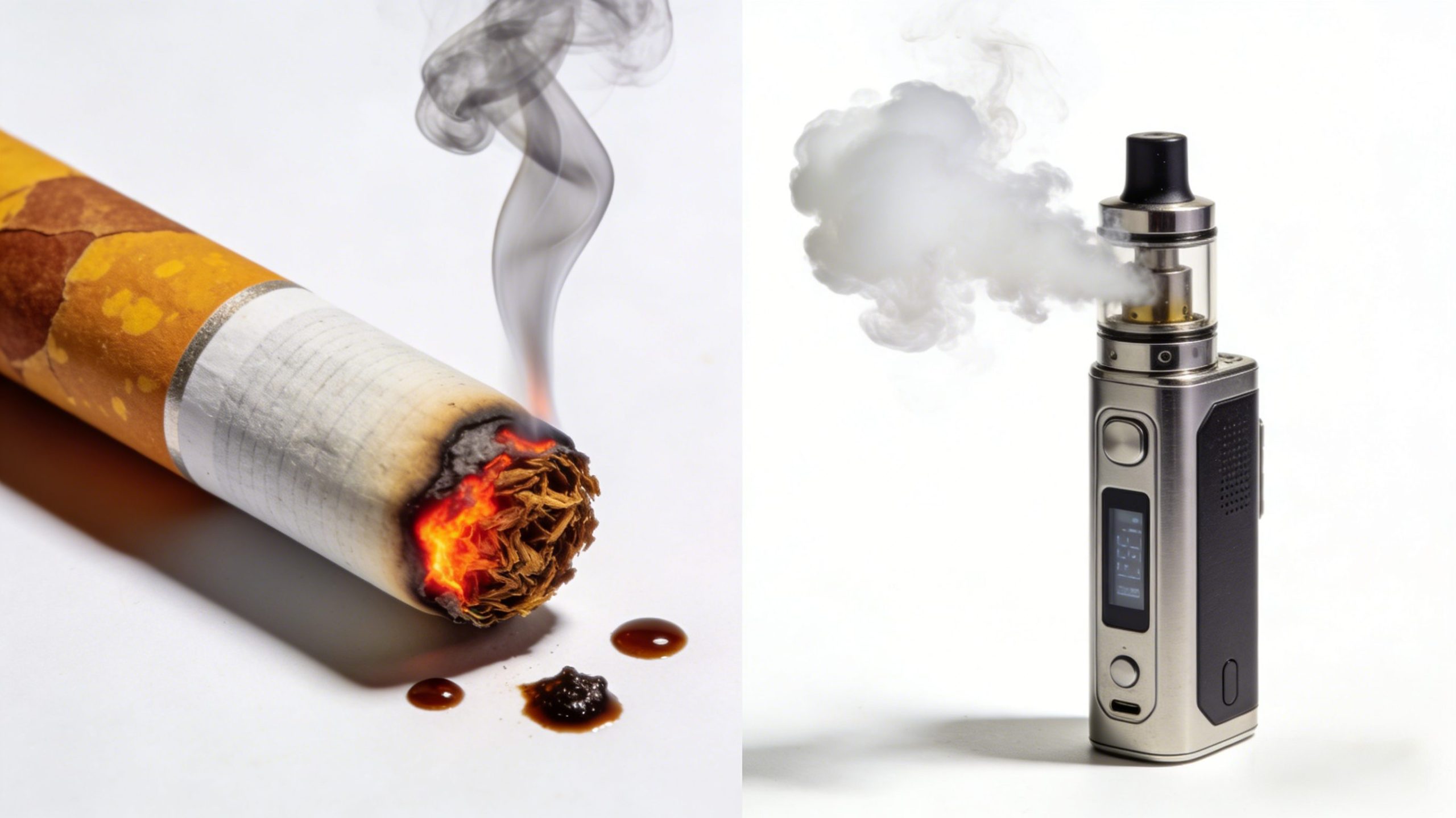
Which One Is Most Harmful: Cigarette or Vape?
Cigarette or Vape? Which One Is More? The direct answer is—Cigarettes are more disadvantageous in terms of health, but vaping isn’t safe either. In rare cases, vaping can be equally harmful or worse (like with THC vape, which is “double trouble” getting way more harmful than cigarettes). Using vapes for a long period without a quit plan usually just trades one addiction for another.
- If you do not smoke, do not vape.
- If you do smoke, vaping might minimize some risks only when used for a short time and purposely, never as a permanent substitution.
Cigarettes vs. Vapes: What’s the Difference in Harm and Which Is More Harmful
The most important aspect of deciding which one is less harmful is “the type, quantity, and the level of the harmful substances in the product.” Let’s go through the information regarding both, primarily the vape type differences, as that is the point where most of the quitters get puzzled.
Cigarettes: The “All-Around Carcinogen” with a Complex Toxic Mix
Over 7,000 chemicals are generated when a cigarette is lit, among them at least 69 recognized as carcinogens. Cigarette smoke is a very toxic substance that burns tobacco and generates high-dose toxins, which are very difficult to avoid and which harm almost all body organs.
- Tar: Tar is smoking’s best friend, cancer. It is a sticky combination of by-products from burning tobacco that settles in the lungs and airways. Long-term collection is strongly associated with lung, throat, esophagus, and bladder cancers, as well as chronic bronchitis and emphysema.
- Carbon monoxide (CO): CO attaches to hemoglobin even more effectively than oxygen does, thus reducing oxygen supply to the body’s organs. As a result, in the short run, it causes tiredness and loss of balance. In the long run, it enhances the chances of developing heart diseases and strokes.
- Heavy metals and powerful carcinogens: The tobacco plant absorbs lead, cadmium, and mercury from the soil. These metals are stored in the body and cause harm to the kidneys and the nervous system. In addition, cigarette smoke contains polycyclic aromatic hydrocarbons and nitrosamines, which are among the most potent cancer-causing agents known.
Vapes: Not “Harmless”—Harm Varies Big Time by Type
Tar and carbon monoxide emitted from smoking usually cause most of the harm.
The usual constituents of e-liquids are typically:
- Propylene glycol (PG)
- Vegetable glycerin (VG)
- Flavoring chemicals
- Nicotine (optional)
- THC (in some products)
- Heat-generated chemical byproducts
When heated, the mentioned liquids are capable of generating formaldehyde, acetaldehyde, and ultrafine particles, which in turn have the potential to irritate and inflict harm on both the respiratory and cardiovascular systems. To better understand the issue, let’s take a closer look at the four principal categories, which you should be familiar with:
THC Vapes: “Double Trouble”—More Harmful Than Cigarettes
Among all the vapes, these are the most dangerous ones, and you should keep your distance from them absolutely. The vapes have a terrible physical impact and at the same time, they have a negative effect on your mind:
- Mental addiction and hallucination risks: The THC (the mind-altering substance in weed) is the one that activates the brain’s newest part, along with the other drugs making the person’s mind highly dependent. Long-term effects on the user can produce hallucinations, paranoia, and memory loss; however, the situation is particularly worse for the yout,h as their brain is still under development.
- Toxicity: Along with THC, nicotine, and flavorings are also part of the e-liquid used in these vapes. The heating process still gives rise to formaldehyde and acetaldehyde (both known to cause cancer). Therefore, you will have to deal with a two-fold disadvantage: mental harm from THC and physical harm from the chemicals used in the usual vaping process.
High-Nicotine Vapes: Just as Addictive as Cigarettes—Risky Transition Tool
Currently, the most prevalent vapors on the market are these and some smokers who are trying to quit even use them as a “replacement.” Nonetheless, the harm is primarily due to two significant factors:
- Nicotine Addiction: Vaping nicotine is as addictive as smoking nicotine, but it is much harder to control the intake as vapes deliver it so fast.
- Toxic Byproducts: These substances increase blood pressure and heart rate. For adolescents and young adults, this may lead to irreversible brain impairment.
Low-Nicotine Vapes: Less Addictive, But Still Harmful
These vapes generally contain 1-3mg/mL of nicotine (in contrast to the 6-20mg/mL found in regular nicotine vapes) and their main purpose is to help smokers quit gradually:
- Advantages: By far less of an addiction. The tiny nicotine content mitigates the withdrawal effects (including irritability, insomnia, and lack of concentration) and at the same time, the nicotine your body will eventually depend on is reduced, thus you will be able to quit for good later on with fewer problems.
- Disadvantages: Nicotine levels might be lower, but other dangers are still there. Along with high-nicotine vapes, they emit formaldehyde and toxic flavorings when heated. Do not consider “low nicotine” as a signal that you can use them freely.
Nicotine-Free Vapes: No Addiction, But Not Harmless Either
Many individuals associate “no nicotine = safe” with a certain level of safety, but in reality, that is not the case:
- Harm from E-Liquid Base & Flavorings: The production of toxic gases when heated comes from e-liquids’ propylene glycol and vegetable glycerin, even when nicotine is absent. Flavorings (like diacetyl for buttery tastes) are also harmful. Long-term inhalation can irritate the lungs, causing coughing, dry throat, and even asthma.
- Doesn’t Fix the Real Dependence: Smoking cessation is difficult not only due to the physical nicotine addiction, but also to the mental habit of “smoking”. Nicotine-free vapes might facilitate the physical action, but they do not remain supportive of your body getting over the nicotine cravings. Rather, they can entrap you in a new cycle of prolonged vape usage.
So… Cigarette or Vape: Which One Is Most Harmful?
In terms of “lethality” of noxious ingredients, cigarettes are more fatal and harsh on the body due to tar and carbon monoxide. Nevertheless, vapes are not completely safe—THC vapes are the most deleterious ones, and non-nicotine or low-nicotine vapes still pose substantial health risks. The harm they inflict is the only distinction.
| Key Harms | Cigarettes | Vpae | |||
| THC Vapes | High-Nicotine Vapes | Low-Nicotine Vapes | Nicotine-Free Vapes | ||
| Cancer Risk | Extremely High (70+ carcinogens) | High (Heated THC + toxic additives) | Medium (Formaldehyde, acetaldehyde, etc.) | Low-Medium (Same as high-nicotine, less nicotine) | Low (Aerosol irritants, no nicotine) |
| Addiction Risk | Extremely High (Nicotine + smoking ritual) | Extremely High (Dual addiction: nicotine + THC) | Extremely High (High nicotine dose, easy inhalation) | Low-Medium (Low nicotine content) | Low (No nicotine) |
| Organ Damage Range | Whole body: lungs, heart, teeth, skin, reproductive system | Lungs (severe damage), brain (mental health issues) | Heart (high blood pressure), lungs | Lungs (inflammation, popcorn lung risk) | Lungs (airway irritation) |
| Overall Harm Level | Extremely High | Extremely High (Often worse than cigarettes) | High | Medium | Low-Medium |
Trying to Quit? Is a Vape a “Helper” or a “Trap”?
Is it possible that using a vape might assist you in quitting smoking, or will it simply lead you to another addiction? The answer is very straightforward: vapes are very high-risk transition tools—not healthy alternatives. Here are the reasons why:
Vapes ≠ Healthy Alternatives—They’re High-Risk Transitions
The WHO and the China CDC agree: smoking cessation is not recommended through vaping as a regular method. The use of vapes should be restricted to a last-resort transition tool if other methods fail—and it should only be under the supervision of a doctor for a maximum of 3 months.
In contrast, Nicotine Replacement Therapy (NRT)—nicotine gum or patches, for instance—is significantly safer. These products do not generate harmful aerosols and assist the human body in quitting nicotine by means of a more scientific approach.
Better Quit Options: Science-Backed & Safer
It is highly recommended to opt for quitting methods that have been proven safe and effective instead of using vapes. The best option will depend on your particular situation—here’s a breakdown:
| Your Situation | Recommended Quit Method | Key Benefits | Things to Note |
| Heavy Smoker (1+ pack/day) | Talk to a doctor about prescription meds (like Chantix/varenicline or Wellbutrin/bupropion) + behavioral therapy (counseling or quit support groups) | Meds cut nicotine cravings and withdrawal symptoms; therapy tackles mental dependence. Together, they boost success rates. | Follow your doctor’s dosage exactly—don’t adjust on your own. Don’t miss doses, as this affects effectiveness. |
| Looking to Wean Off Gradually | Nicotine Replacement Therapy (NRT): patches, gum, lozenges, or inhalers | Controlled nicotine intake eases withdrawal without the harmful chemicals in cigarettes/vapes. You can slowly lower the dose for a smooth transition. | Use as directed—don’t mix multiple NRT products (risk of nicotine overdose). Watch for skin irritation with patches. |
| Quit Before, But Scared of Relapsing | Short-term NRT (if needed) + join a quit group/find a quit buddy + avoid trigger situations (drinking, hanging with smokers) + healthy stress relievers (exercise, meditation, hobbies) | Targets relapse risks directly. Mental support + behavioral changes double down on keeping you smoke-free. | Use healthy stress relievers first—don’t give in to “just one cigarette.” If you do relapse, don’t beat yourself up—adjust your plan and start again. |
Will Long-Term Vape Use Make Things Worse?
Short-Term Effects: Eases Withdrawal, But Use Wisely
In the case of chain smokers, quitting overnight is nothing less than detrimental—irritability, anxiety, insomnia, and increased appetite are among the withdrawal symptoms that are very difficult to cope with. Low-nicotine vapes can be useful in this matter as they help users with their nicotine control: nicotine intake in gradually lowering amounts helps to reduce physical discomfort, thus, you can get through the hardest days of withdrawal.
However, there is a condition: You should have a very definite reduction plan (like, start with 10 puffs a day, then 5, and 3 until you quit completely). No-limit usage means you become addicted to the vape—swapping cigarette addiction with vape addiction that goes against the purpose of quitting in the first place.
Long-Term Risks: Watch for “Second Addiction” and Relapse
WHO research indicates that long-term vape users are 30% more likely to relapse into smoking compared to non-vapers. The reason is quite straightforward: the “smoking motion” and “vapor taste” of vapes strengthen mental dependence, the body gets adapted to nicotine and smoking techniques—thus, it is always hard to quit smoking for good.
What is even more disturbing is that some underhanded manufacturers are increasing nicotine or other addictive substances in vapes, thus making users dependent over time—and consequently, quitting is made tougher.
3 Big Myths Quitters Need to Avoid
Myth 1: “Vapes are safer than cigarettes, so it’s okay to use them long-term.”
False! “Safer” doesn’t mean “safe.” The formaldehyde and toxic flavorings in vapes still damage your body over time. The goal of quitting is to break addiction entirely—not just switch to a slightly less harmful substitute.
Myth 2: “Nicotine-free vapes are quit magic.”
False! Nicotine-free vapes only address physical addiction—not mental dependence. Many people who use them still relapse to smoking because they’re used to the “vaping motion.” Plus, they still irritate your airways—there’s no point in using them long-term.
Myth 3: “Vaping secondhand smoke is harmless to my family.”
False! Vape secondhand aerosol (not “vapor”) contains nicotine, formaldehyde, and ultra-fine particles. While the concentration is lower than that of cigarette secondhand smoke, long-term exposure still harms the airways and cardiovascular systems of sensitive people, like the elderly, kids, and pregnant women. Never use vapes indoors or in enclosed spaces.
Final Practical Tips for Quitters: Quit to Break Dependence, Not Switch It
Cigarettes are fatal and harm the whole body; vapes are less harmful but still pose a risk. For those trying to quit, vapes are not “the best option” at any time—just a last resort and a transition tool.
Quitting smoking means completely depending on both nicotine and smoking habits. Instead of “which is less harmful,” it’s time to shift your thinking to “how to quit for good”.
- First off, go for science-backed quit methods: if your addiction is mild, try behavioral changes (avoid smoking triggers, chew gum instead of smoking) + NRT (gum or patches). If it’s severe, talk to a quit clinic directly—doctors can create a personalized plan, including medication support.
- If you do use a vape as a transition, stick to regulated, low-nicotine brands (no THC, no illegal additives). Make a strict reduction plan and use it for no more than 3 months to avoid a second addiction.
- Steer clear of THC vapes entirely: they’re illegal, highly mentally addictive, and super toxic physically. They’ll totally derail your quit plan and even harm your nervous system.
- Don’t aim for perfection: quitting is a gradual process. Relapses happen—what matters is adjusting your plan and keeping going. That’s way more important than blindly relying on “replacement tools.”